What an invoice must contain: required fields in the EU, UK and US
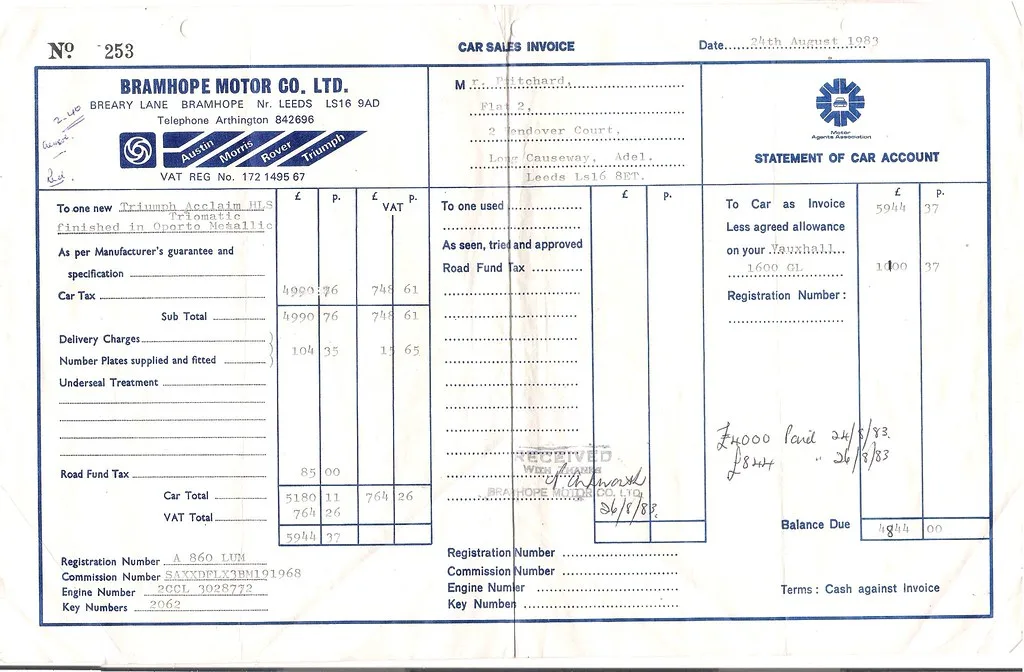
An invoice is not just a request for money — in most of Europe it is a tax document, and a missing field can cost your client the right to deduct the VAT on it. The good news is that the list of required particulars is short, stable and written down. This guide walks through the European rules first, because they are the strictest and the most widely copied, then looks at the United Kingdom after Brexit and at the United States, where the whole concept works differently. At the end there is a short section on mandatory electronic invoicing, which is arriving country by country and changes what “sending an invoice” means.
The European list: Article 226 of the VAT directive
Council Directive 2006/112/EC, Article 226, spells out what a VAT invoice must show. In practice it comes down to: the date of issue; a sequential number that uniquely identifies the invoice; the supplier's VAT identification number; the customer's VAT number where the customer is liable for the tax; the full name and address of both parties; the quantity and nature of the goods or services; the date of supply if it differs from the issue date; the taxable amount per rate; the unit price excluding VAT with any discounts that are not already in that price; the VAT rate applied; and the VAT amount payable.
Two details trip people up. The first is “taxable amount per rate”: if one invoice mixes a 24 % line and a 0 % line, the document has to show the base for each rate separately, not just one grand total of VAT. The second is the unit price: it must be the price before VAT, which is why a tool that lets you type tax-inclusive prices still has to divide the tax back out for the printed sheet.
Member States may allow a simplified invoice for small amounts — Article 220a sets the bar at EUR 100, and Article 238 lets countries raise it to EUR 400 in some cases. A simplified invoice can leave out the customer's details and the taxable amount per rate, but it still needs a date, a number, the supplier's identity, a description and the VAT payable. Check the threshold in your own country before relying on it.
Numbers and dates carry more weight than they look
Article 226(2) asks for a “sequential number, based on one or more series, which uniquely identifies the invoice”. The wording allows several series — one per year, per branch or per client type — as long as each invoice can be told apart from every other one. In day-to-day terms this means 2026-001, 2026-002 and so on is fine, and so is A-014 alongside B-014, but reusing a number is not.
The date of issue and the date of supply are two separate fields for a reason. The supply date — the “tax point” — decides which VAT period the transaction falls into, and it is often earlier than the day you got round to writing the invoice. If the two differ, print both; if they are the same, one date is enough.
VAT numbers and the wording for cross-border work
When you sell services to a VAT-registered business in another EU country, the place of supply usually moves to the customer and they account for the tax themselves. Your invoice then shows 0 % VAT, both VAT numbers, and the words “Reverse charge” — that exact mention is required by Article 226(11a). Leave it off and your client's accountant will ask for a corrected invoice.
Always validate the customer's VAT number before you rely on the reverse charge. The European Commission's VIES service checks a number against the issuing country's register and returns a consultation number you can keep as evidence. A number that looks plausible but is not registered turns a zero-rated invoice into one where you owe the VAT.
Other special regimes have their own required wording: “Cash accounting scheme”, “Self-billing” when the customer issues the invoice on your behalf, and “Margin scheme — travel agents” or “— second-hand goods” where those apply. They are one short line, and their absence is exactly the kind of thing an auditor notices.
The United Kingdom after Brexit
HMRC's list in VAT Notice 700 is close to the European one, which is no surprise given where it came from. A full UK VAT invoice needs a sequential number, the time of supply, the date of issue, your name, address and VAT registration number, the customer's name and address, a description good enough to identify what was supplied, and — for each description — the quantity, the VAT rate, and the amount payable excluding VAT. Then the total excluding VAT, the rate of any cash discount, and the total VAT.
Two British specifics matter. The total VAT has to be expressed in pounds sterling even when the rest of the invoice is in another currency, so an invoice billed in euros still carries a sterling VAT figure. And a simplified VAT invoice is allowed for supplies up to GBP 250 including VAT, which covers most small retail-style transactions.
The United States: freedom, and then state sales tax
There is no federal VAT in the United States and no federal template for an invoice. Legally, a commercial invoice can be a line of text in an email. In practice, US clients expect an invoice number, your business name and address, their billing entity and address, a purchase-order number if they gave you one, the service period, itemised amounts, a total, and payment instructions — because that is what their accounts-payable system requires before it will schedule a payment.
Sales tax is a state matter, charged on the final sale rather than at every step, and most professional services are outside it in most states. If you do sell taxable goods or services into a state where you have economic nexus, the tax goes on its own line with the rate and the jurisdiction. Foreign freelancers invoicing a US company will usually be asked for a W-8BEN or W-8BEN-E before the first payment.
Where mandatory e-invoicing is going
A PDF is a picture of an invoice; an e-invoice is structured data a machine can read without guessing. Europe standardised the semantic model as EN 16931, and the Peppol BIS Billing 3.0 format is what most national systems exchange. Italy has required electronic invoicing through its SdI platform since 2019, Poland's KSeF became mandatory during 2026, and Germany has required every domestic business to be able to receive an e-invoice since January 2025, with issuing phased in later this decade.
For a freelancer this matters in one practical way: a client in a mandated country may not be able to accept your PDF at all, and will ask you to send through their national portal or a Peppol access point instead. Ask before the first invoice rather than after it bounces. Outside those systems, a well-formed PDF with every required field is still exactly what the rules ask for.
The takeaway
Build one invoice template that carries every Article 226 field — number, both dates, both parties with their VAT numbers, a description and quantity per line, the taxable amount and VAT per rate, and the total — and you will satisfy the European rules, the UK list and any US client's accounts-payable department at the same time. Add the reverse-charge line when you bill across a border, and ask clients in countries with mandatory e-invoicing how they want to receive it.
Fill the form, download the PDF — no sign-up